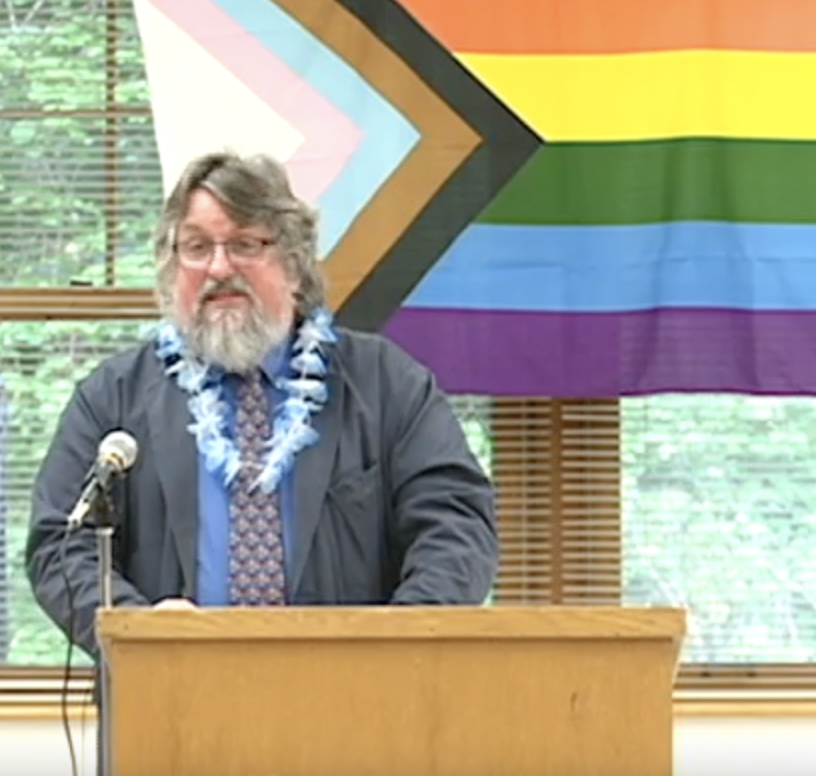
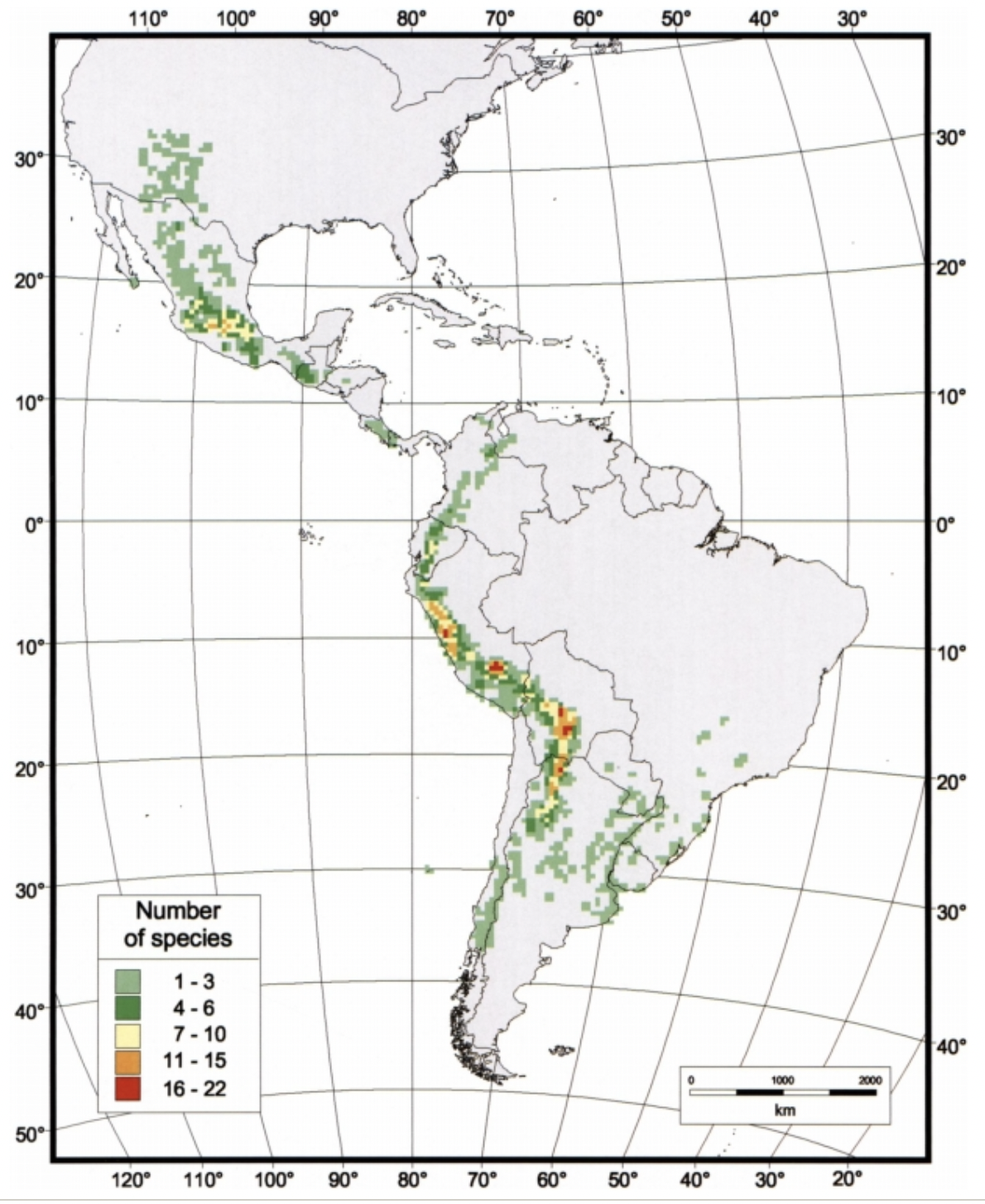
My first airline travel since 2020 will be to Denver, Colorado for the Annual Meeting of the American Association of Geographers, where I will give a brief presentation entitled EarthView: Regional Outreach in Geographic Education. I mention it in this space as a convenient way to share my slides and abstract.
Abstract (a summary of what I planned to hope to say)
As it was taught in mid-twentieth century schools in the United States, geography was so pedantic in its approach and so narrow in its worldview that it was considered progressive to get rid of it. The social studies curricula that emerged as a result have lacked spatial perspectives, and geographic illiteracy has become rampant. Introductory university courses in geography now often include remediation for geographic learning that was once part of K-12 education.
This paper describes educational outreach programs through which geography faculty at Bridgewater State University in Massachusetts have worked directly with thousands of students and dozens of teachers each year since 2008. The work has given the faculty members and participating undergraduate assistants deep insights into the diverse communities of our region, while helping middle-school students and their teachers better understand their connections to the wider world.
Sustained outreach of this kind requires significant effort, but brings significant rewards to a department, a university, and the surrounding region. The visits to schools often attract positive attention from parents, media and political leaders. This work leads to conversations about a modern geography that no longer promotes rote memorization and a colonial worldview, but rather serves as a positive force for equity, inclusion, diversity, and justice.
L'esprits d'escalier
After this presentation -- in which I thought I conveyed both the need for and value of our outreach programs with some panache -- I found myself in the position of the philosopher Diderot, who coined this term, meaning "wit of the staircase." I originally learned it as "angel of the staircase," which I still prefer.
As with Diderot in the original story, I was caught off-guard by a question that I have heard before but do not consider central to the spirit of the presentation itself, and like Diderot, right after the session I thought of a better answer. To be honest, Diderot thought of one perfect answer (hence his use of "wit" rather than "spirit"), whereas I thought of one and then another and another as I brooded over this a bit.
The question was a bit surprising because it came from a fellow professor with decades of teaching experience who has used many of the same resources I described, in many of the same ways. He said, however, that the National Geographic's use of "entertaining and educational" for such giant-map programs was not supported by evidence, and he asked whether I had set up pre- and post-program surveys to document the educational benefit in terms of student learning on specific learning standards.
My reply was to sputter a bit and eventually to mention a few ways in which we had done some of this kind of "assessment," but not to make clear why this is exactly the wrong question. So here are a few stairway replies:
1. Like the questioner, I am a tenured full professor of geography. That is all the validation my lessons need. This does not mean everything I teach is equally successful, but it does mean that I have been thoroughly vetted by my peers and I am able to discern what is working and what is not. We need to have more faith in the educational process. In fact, such standards are themselves only valid to the extent that qualified scholars have developed them.
2. Teachers -- excellent teachers -- keep requesting this program. As recently as the day before my presentation, they were explaining exactly why it was effective and what kinds of lessons their students were drawing from it.
3. As I mentioned in the program, the program has led several students who participated in their K12 career to choose our geography department for their undergraduate careers. Clearly they learned something substantial, and in many cases our program was deepening the impact of what they were learning form our excellent colleagues in middle schools. The entertainment value of our 20-minute programs could not possibly have been exciting enough to drive their choices of university and major -- something more substantial was happening.
4. I do the EarthView program on top of a 4-4 teaching load and many other responsibilities. Any "spare" time I have is for looking forward, not backward. As I mentioned, our support team does do some very general surveying, but nothing tied to the standards.
5. The NCLB-era notions of educational value are demonstrably flawed, but the accountability movement is not yet being held accountable, as I have discussed at length in a number of accountability posts on my main blog. I do not see any need to invest in false measures of effectiveness.
6. As I mentioned in the presentation, our program is mentioned on PAGE 1 of the national standards. The people who published the standards -- from AAG, NCGE, and NatGeo -- asked us for that photograph as part of the introduction of the 17 national standards in geography.
7. And finally (I promise): the people who insist on reducing the art of education to the ticking of boxes on lists do not care about geography standards. That is exactly the problem we face: it is illegal to become a high-school geography teacher in Massachusetts and many other states. Showing that we are good at it is pointless, unless we make the case in other ways.
And we are doing just that in Project EarthView and its related endeavors! We encourage my colleagues in geography to be bold and to find creative ways to show that we have something important to offer in teaching and learning about climate change, global connections, and much more!
Lagniappe
A little treat for those who are still reading: photos from the applied geography (human and physical) I explored while in the Denver area for the meeting. I took the unusual (for me) step of annotating a full set of images (but not too many) in my AAG Denver 2023 folder on Flickr. Enjoy!